How to Distinguish Between soft enamel and Imitation Hard Enamel
What Are Soft Enamel and Imitation Hard Enamel?
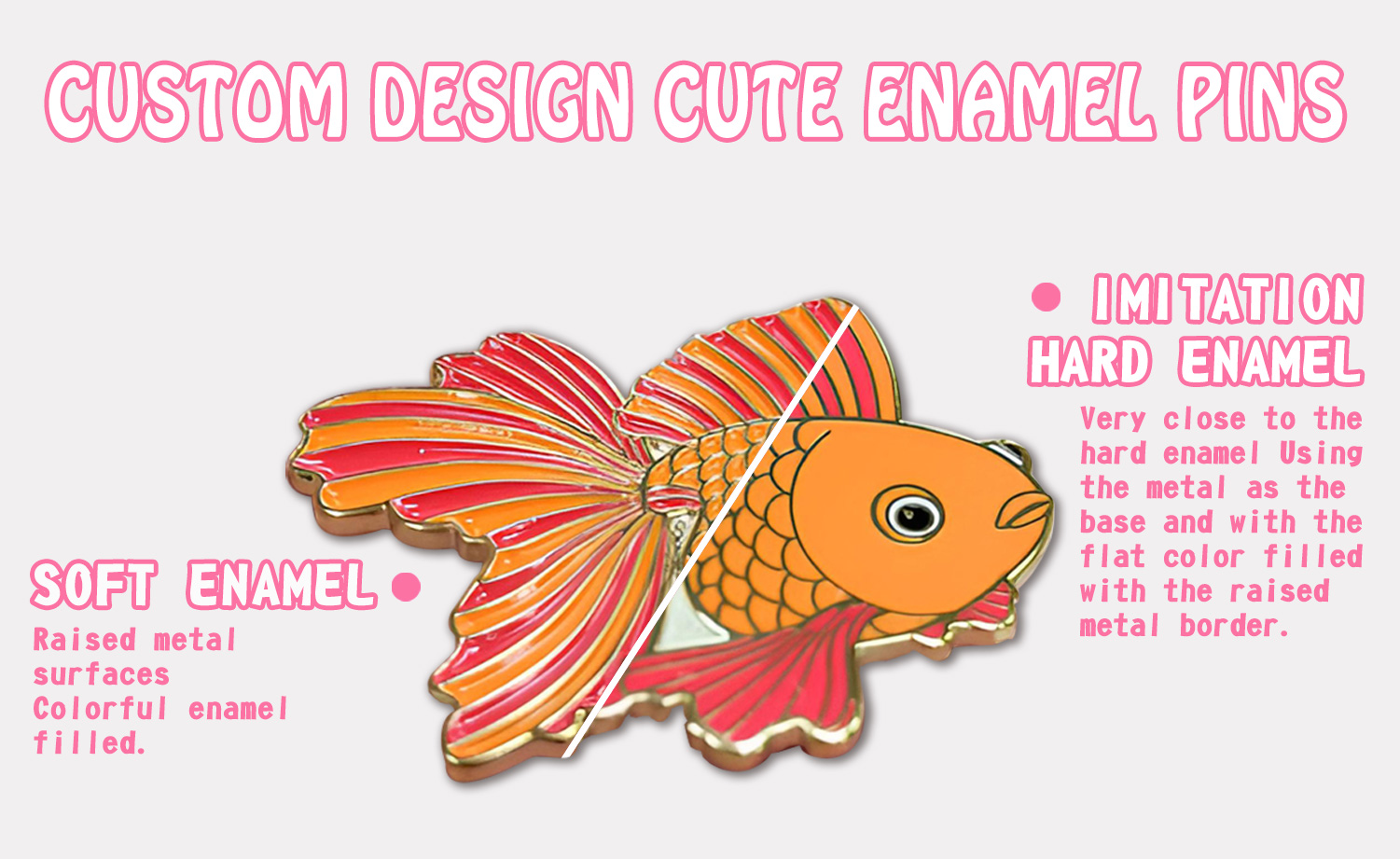
- Soft enamel: Colors are filled into recessed designs on the metal, then polished. The enamel sits slightly below the metal edges, creating a textured finish.
- Imitation hard enamel: Mimics the smooth look of true hard enamel (a high-heat, glass-like process) but uses a simpler method. Colors are applied to fill designs, then sealed to create a flat, even surface with the metal edges.
Key Differences: How to Identify Them
1. Surface Texture: The Most Obvious Clue
- Soft enamel: Has a textured, recessed surface. After polishing, the enamel remains slightly lower than the metal borders. Run your finger over it, and you’ll feel distinct ridges between the enamel colors and the metal frame—like small, smooth "pits" in the design.
- Imitation hard enamel: Boasts a flat, glass-like surface. The enamel sits level with the metal edges, creating a seamless, smooth finish. There are no noticeable depressions or ridges, so it feels uniformly sleek to the touch, similar to polished stone or ceramic.
2. Color Depth and Vibrancy
- Soft enamel: Colors are often lighter and more translucent. The enamel is thinner, so the metal base beneath may subtly show through, giving hues a muted or pastel-like tone. While the color range is wide, shades can appear less saturated under bright light and may fade slightly over time with frequent handling.
- Imitation hard enamel: Features deeper, more vibrant colors. The enamel layer is thicker and opaque, blocking the metal base entirely. This results in bold, saturated hues that stay vivid in any light. The colors are also more resistant to fading, making them ideal for pieces meant to last.
3. Durability and Longevity
- Soft enamel: Less durable due to its recessed design. The enamel is prone to scratches, especially where it meets the metal edges. Dirt can collect in the small gaps, making cleaning trickier. With rough use, it may chip or flake over time.
- Imitation hard enamel: More durable thanks to its smooth, even surface. The thicker enamel (often sealed with a protective layer) resists scratches and wear better. It’s easier to clean (no crevices for dirt) and holds up well to daily use, though it’s not as tough as true hard enamel (which uses high-heat firing).
4. Best Uses for Each Technique
- Soft enamel: Great for budget-friendly projects, casual badges, or pieces where texture adds character. It’s popular for event souvenirs, club pins, or decorative jewelry where a relaxed, tactile look is desired.
- Imitation hard enamel: Ideal for premium pieces like military medals, corporate badges, or fine jewelry. Its sleek, polished finish suits formal settings, and its durability makes it a good choice for daily wear.
How to Choose: Soft Enamel or Imitation Hard Enamel?
- Pick soft enamel if you want texture, a wider color range, or a more affordable option.
- Choose imitation hard enamel for a smooth, high-end look, vibrant colors, and better durability.
HAPPY GIFT: Precision Craftsmanship, Guaranteed Excellence
With over 40 years+ of expertise in custom metalwork, we transform visions into heirloom-quality pins and medals.
Why Choose Us?
✅ Disney-Certified Quality: Our factory holds Disney’s stringent manufacturing certification for over a decade.
✅ Artistry Meets Engineering: Complex designs demand skill—our master artisans optimize intricate details, advising on optimal techniques (e.g., enamel vs. printing) for flawless results.
✅ End-to-End Guidance: From mold creation to color matching, our team ensures every micron aligns with your vision.
First-Time Order? Let’s Simplify Your Journey!
Share your design ideas, and our specialists will guide you through:
Email: inquiry@hey-gift.com
WhatsApp: +86 18122811289
How to Choose Between PVC and ABS toy figure? A Guide to Blind Box Material Differences and Customization Tips
Embroidery Patches VS Woven Labels: Unlock Your Fashion Styling Code