New Trend in Badge Making: Can UV Printing Replace Baking Enamel Process?

The Working Principle of UV Printing
-
Preprocessing: Before printing, the substrate materials for badges (such as metal, plastic, etc.) need to undergo cutting, polishing, cleaning, and other treatments. If the material has low adhesion, surface coating treatment is required to enhance ink adhesion, laying a good foundation for subsequent printing.
-
Printing: Using a UV printer and digital printing technology, the designed images from graphic software are input, and the print head sprays UV ink onto the surface of the substrate.
-
Coating (Optional): According to the design requirements of the badge and the characteristics of the substrate, some badges may need coating treatment after printing. This not only protects the printed image to make it more durable but also adds special effects, enhancing the aesthetics, smoothness, and performance (such as waterproof and UV resistance) of the badge surface.
-
Drying: This is a key link in UV printing. Using UV curing technology, the printed image dries rapidly. UV inks can cure instantly within milliseconds under ultraviolet irradiation, avoiding the long waiting time required for traditional water-based printing and greatly improving production efficiency.
Significant Advantages of UV Printing over Baking Enamel Process
- Superior Color Performance
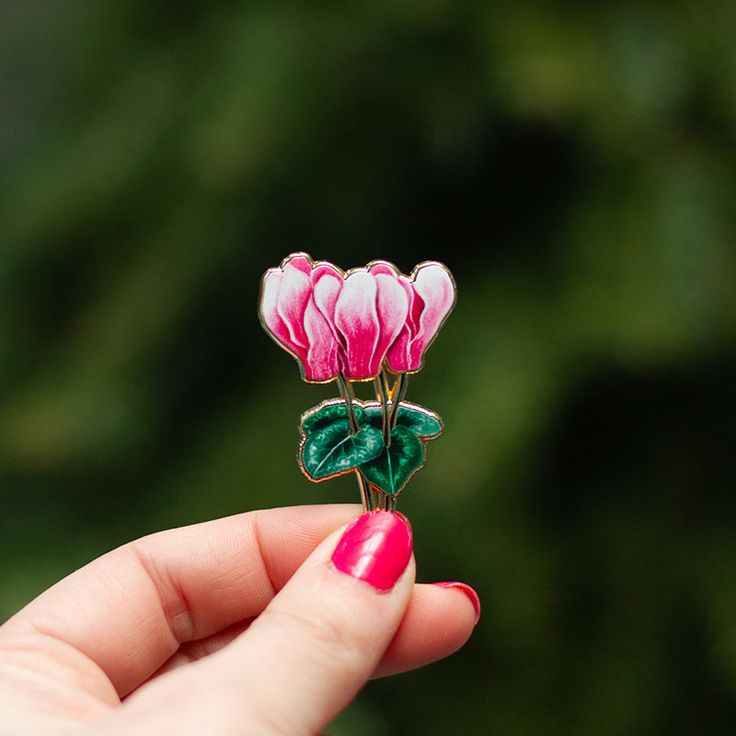
UV printing is unparalleled in color presentation. On the one hand, it can achieve high-saturation, high-definition color effects, making the patterns and text on badges come to life. For example, when making colorful anime character badges, UV printing can make the character colors more vivid and dynamic, greatly enhancing the visual appeal of the badge. On the other hand, its color accuracy is extremely high. Through professional color management software and high-precision nozzles, it ensures that the colors in the design design draft are presented on the badge with minimal color difference, which is particularly important for brand badge production with strict requirements for color consistency.
-
Wider Range of Applicable Materials
The compatibility of UV printing with substrates is astonishing, as it can perform well on almost any material, including common metals, plastics, ceramics, and special materials like wood and glass. Regardless of the badge material, UV printing can perfectly adhere to its surface, ensuring printing quality. Take metal badges as an example: the traditional baking enamel process usually requires electroplating the base color first, followed by partial coloring, involving complex procedures and prone to color differences. UV printing, however, can directly print full-color patterns on polished metal surfaces, eliminating the electroplating link and eliminating color differences. For some special-shaped badges, such as curved or concave-convex designs, the print head of a UV printer can intelligently adjust the height to ensure uniform ink coverage, breaking through the physical limitations of flat printing—a feat difficult for the baking enamel process to achieve. -
Superior Printing Precision
UV printing excels in precision, capable of accurately reproducing design patterns, whether fine text or complex images, with clear and delicate printing. When making commemorative or honor badges with fine patterns or logos, the advantages of UV printing are extremely evident. For example, when making a school anniversary commemorative badge, UV printing can precisely present the details of the school logo and the micro-text of the founding year, making the badge more commemorative and collectible. The baking enamel process, especially with manual coloring, has relatively difficult control over tiny details, prone to blurred or distorted patterns. -
Significantly Improved Production Efficiency
The production efficiency of UV printing is commendable. Since UV inks cure rapidly under ultraviolet irradiation, there is no need to wait for a long drying time like the baking enamel process, greatly shortening the production cycle. If automated equipment is used, production efficiency can be further improved. For example, when mass-producing corporate event badges, UV printing can complete large orders in a short time to meet the urgent time requirements of enterprises. The baking enamel process, for smaller quantities, may require manual coloring; for larger quantities, although machine coloring can be used, it still requires multiple processes such as typesetting, coloring, and baking, resulting in a longer overall production cycle. -
Superior Environmental Performance
With growing environmental awareness, the environmental advantages of UV printing have become increasingly prominent. UV inks do not contain volatile organic solvents, producing no harmful gases or pollutants during the printing process, posing minimal impact on the environment and operators' health, in line with modern environmental requirements. The baking enamel process, during operation, uses materials like paint that may release Volatile Organic Compounds (VOCs), causing certain pollution to the environment and potentially endangering the health of operators through long-term exposure.
Future Prospects of Badge Craftsmanship
HAPPY GIFT: Precision Craftsmanship, Guaranteed Excellence, Pin Badge Maker
With over 40+ years of expertise in custom crafts, we transform visions into heirloom-quality crafts.
Why Choose Us?
✅ Disney-Certified Quality: Our factory holds Disney’s stringent manufacturing certification for over a decade.
✅ Artistry Meets Engineering: Complex designs demand skill—our master artisans optimize intricate details, advising on optimal techniques (e.g., enamel vs. printing) for flawless results.
✅ End-to-End Guidance: From mold creation to color matching, our team ensures every micron aligns with your vision.
First-Time Order? Let’s Simplify Your Journey!
Share your design ideas, and our specialists will guide you through:
Email: inquiry@hey-gift.com
WhatsApp: +86 18122811289
Unveiling the Production of Metal Medals: The Magical Journey from Design Sketch to Glorious Award
Electroplating Antique Finishes: The Fusion of Retro Texture and Practical Value